
Overcoming Drop-Off Anxiety: Emotional Tools to Transition Your Child from Separation Tears to Morning Excitement

Overcoming Drop-Off Anxiety: Emotional Tools to Transition Your Child from Separation Tears to Morning Excitement

Overcoming Drop-Off Anxiety: Emotional Tools to Transition Your Child from Separation Tears to Morning Excitement

Overcoming Drop-Off Anxiety: Emotional Tools to Transition Your Child from Separation Tears to Morning Excitement

Overcoming Drop-Off Anxiety: Emotional Tools to Transition Your Child from Separation Tears to Morning Excitement


Tears at childcare drop-off can be difficult for both children and parents. Even a child who enjoys their day may become upset when it is time to separate in the morning. For young children, this reaction is often part of adjusting to a new routine, building trust, and learning that a parent will always return.
At Scalliwags Child Care, we create a warm, home-like environment for children in Wellesley and Needham where consistency, play, and caring relationships help children develop confidence and independence.
Why Does Drop-Off Anxiety Happen?
Young children are still developing their understanding of time, routines, and separation. Saying goodbye can feel especially difficult after weekends, vacations, schedule changes, illness, or starting a new classroom.
A child may cling, cry, ask a parent to stay, or suddenly become reluctant to enter the building. These reactions do not necessarily mean they dislike childcare. Some children become engaged in play soon after their parent leaves because the hardest part is the transition itself.
Creating a predictable morning routine can help your child learn what happens next and feel more secure over time.
Build a Consistent Goodbye Routine
Children often feel safer when mornings follow a familiar pattern. Try keeping wake-up time, breakfast, getting dressed, travel, and arrival as consistent as possible.
Once you arrive, create a short goodbye ritual that you can repeat each day. It might be a hug, a simple phrase, and a reminder that you will return after their childcare day.
Long or repeated goodbyes can sometimes make separation more difficult. A calm, confident handoff communicates that you trust the people caring for your child and that the routine is safe.
Emotional Tools That Can Make Drop-Off Easier
Every child responds differently, but parents in Wellesley and Needham may find these strategies helpful:
Preview the morning: Tell your child what will happen before leaving home so the transition is not a surprise.
Keep goodbyes brief and predictable: Use the same reassuring words or routine each morning.
Talk about what comes next: Mention a favorite activity, teacher, toy, or friend waiting inside.
Use a comfort item when appropriate: A familiar object can help some younger children bridge the transition from home to childcare.
Stay positive and calm: Children often notice a parent's tone and body language during separation.
Celebrate progress: Acknowledge small successes, such as walking into the classroom independently or recovering more quickly after goodbye.
The goal is not to eliminate every tear immediately. It is to help your child gradually feel more confident with the routine.
Help Your Child Build Positive Associations
Talking about childcare outside of drop-off can also make mornings easier. Ask about favorite songs, art projects, outdoor play, stories, or friends instead of focusing only on whether your child cried.
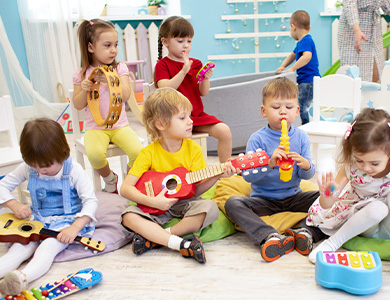
Scalliwags uses an emergent, play-based curriculum designed around social-emotional, cognitive, physical, language, and motor development. Children learn through activities including stories, songs, imaginative play, music, movement, yoga, nature, and hands-on exploration.
When children begin associating childcare with familiar people, enjoyable activities, and predictable routines, morning transitions often become easier.
Partner With Your Child's Teachers
Communication between families and educators is especially valuable during periods of separation anxiety. Let teachers know about recent changes at home, difficult mornings, or strategies that have helped your child settle.
Teachers can also provide insight into what happens after you leave. Learning that your child begins playing shortly after drop-off can make the transition easier for parents too.
If you are looking for a nurturing childcare environment where your child can build confidence, relationships, and independence through play, contact Scalliwags Child Care in Wellesley and Needham, MA at (781) 328-1616 to learn more about our infant, toddler, preschool, and Pre-K programs.
What
We Offer
Keep
In Touch
© 2026 Scalliwags Child Care - All Rights Reserved - Accessibility Statement - Privacy Policy - Sitemap
Powered by 